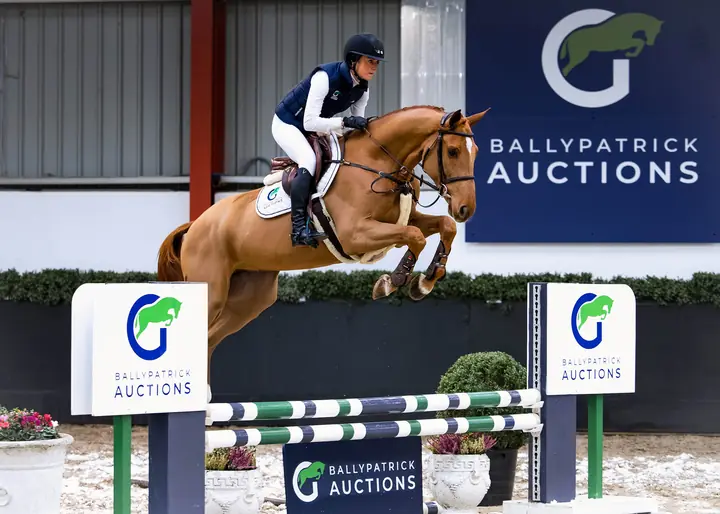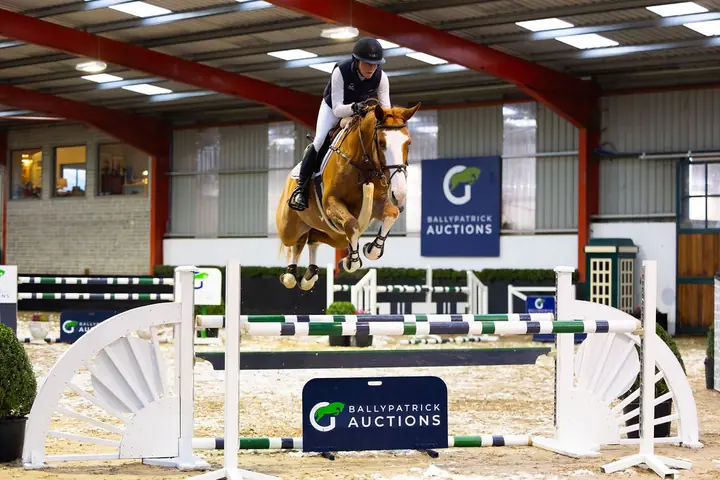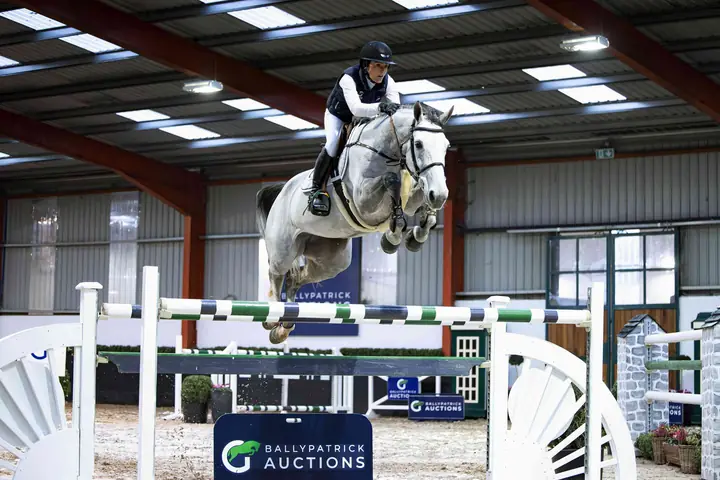
Greg Broderick jumped for Ireland at the Rio Olympics and has produced horses to the top of the sport for two decades. Every horse in a Ballypatrick catalogue is selected by him. Below he explains, in his own words, what he would look for if he were investing in a young horse himself today — and you can hear him tell the same story in the film on this page.
Start with type and canter
"If I was investing in a young horse for myself today, the things I would look for are a nice type. The canter balance is hugely important now, I find — because we all want to have a five-star Grand Prix horse, that's our dream, but the reality is that we're going to hit the crossbar plenty of times."
Type and canter come before everything else in Greg's selection. A nice type with a balanced canter is a horse that is going to be nice to ride, and a horse that is nice to ride has a future whatever level it reaches.
It is not all or nothing
"The good thing about show jumping is it's not all or nothing with our horses. If we buy a nice horse, a good type, with a good canter, nice rideability, and we know that he has a certain level of scope — if it gets to 1.45 or 1.50 level and it's a good type with a good canter, generally it's going to be nice to ride. Therefore it's going to be suited to the amateur market to jump 1.45, 1.50, and that horse has a very high resale value."
"If we're shooting for the stars and we fall a little short of five-star Grand Prix level, but we still have a lovely type of a horse that's nice and comfortable to ride, we can still sell that horse commercially very well. That, for me, makes it a very good investment when you're looking for a young horse."
This is the heart of how Greg selects for the auction: aim for the top, but choose horses whose type, canter and rideability protect the buyer if the horse turns out to be a 1.45m horse rather than a Grand Prix horse. Those horses are wanted by the deepest market in the sport.
The talented horse with the difficult canter
"With young horses you do see some huge talents that have difficult canters. Generally, if you have a difficult canter, you have a difficult mouth — and therefore you have a horse that's maybe just for the professional market. These horses can be brilliant, but sometimes they can break your heart a little bit, because if they don't take that last step to be top horses, the real professionals who want to do the big shows may find they are not good enough for what they need them for. Your market outside of that gets very narrow, and it brings the value of the horse well down."
"The people who want a nice horse to enjoy at the weekends and jump a good class — that's not the kind of horse they want to invest in. It's not the kind of horse trainers want them to invest in either, because they have to help them on it. So that horse can be a trickier sell."
Why a good canter is a safer bet
"A nice type and a good canter is very important, because a good canter generally means horses will have a better mouth, be nicer to work with, and it just makes the whole thing a safer bet."
That is the filter applied to every horse offered to Ballypatrick before it earns a place in the catalogue. When you open a lot page, read the type and the canter first — the videos are there so you can judge both for yourself — then ask our team what the horse is really like to ride.